
5 Trust-Building Activities Every Team Can Use Tomorrow
A sneak peek inside Wolf Logic and the Trust Lab framework. Five simple activities, one for each pillar, that you can run with your team, staff, students or organisation tomorrow. Plus a free printable PDF of all five.
Before wolves hunt, they play.
Before they perform, they connect.
Before they move, they synchronise.
One of the biggest myths in leadership is that trust develops naturally over time. The reality is that trust grows through shared experiences, meaningful conversations and small moments of connection.
That's why we created The Trust Lab, the leadership framework at the heart of our upcoming book Wolf Logic.
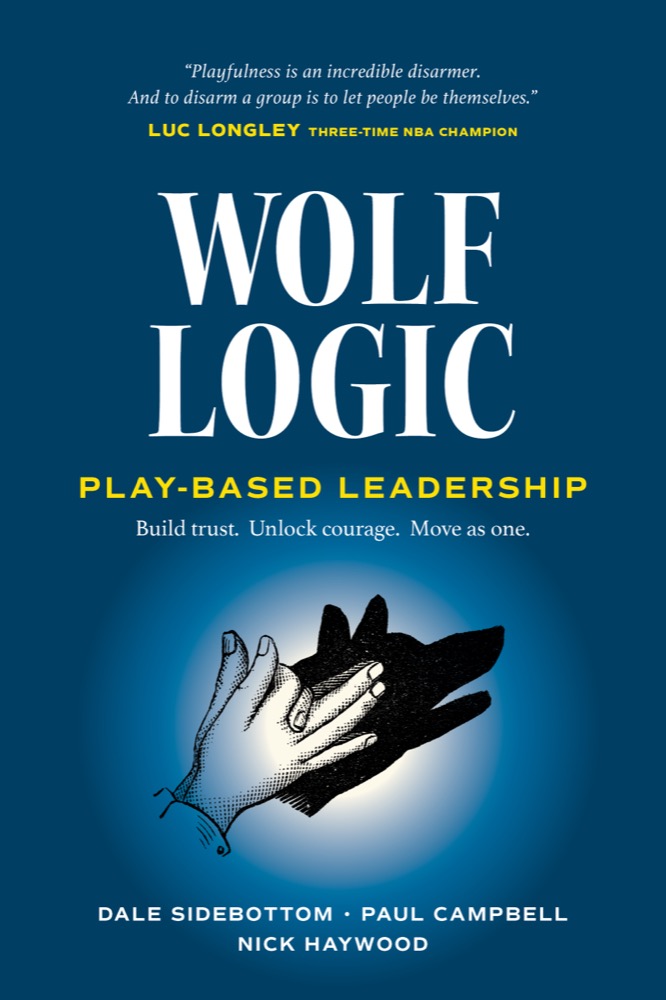 Pre-order Wolf Logic →
The Trust Lab is built around five pillars:
- Ground Yourself.
- Spark Curiosity.
- Build Belonging.
- Align the Collective.
- Move What Matters.
To celebrate the upcoming launch of Wolf Logic, here are five simple activities you can use with your team, staff, students or organisation to bring each pillar to life.
1. Ground Yourself — One Word Check-In
Leadership starts with awareness.
Invite everyone to answer one simple question:
"What's one word that describes how you're arriving today?"
Go around the circle and allow each person to share their word without explanation, unless they choose to. You'll hear things like focused, excited, flat, grateful, overwhelmed, curious.
The beauty of this activity is that it helps people become aware of their current state while giving leaders a quick snapshot of the room.
Why it works: Grounded leaders respond rather than react. This activity helps people pause, become present and recognise that how we show up influences how we lead.
2. Spark Curiosity — The "What If?" Challenge
Curiosity is the engine of innovation.
Ask small groups to discuss one question:
"What if there were no limitations at all? What would we try?"
Give teams three minutes to brainstorm as many ideas as possible. No judging. No evaluating. No practical concerns. Just possibilities.
Then ask: "Which idea has one tiny piece we could actually test?"
Why it works: Curiosity creates movement. This activity helps teams shift from problem-focused thinking to possibility-focused thinking.
3. Build Belonging — The Common Ground Challenge
Split people into groups of four to six. Challenge them to discover five things everyone in the group has in common.
The rules:
- No obvious answers.
- No work-related answers.
- No physical appearance answers.
The deeper and more surprising the connection, the better. You'll hear things like "We've all broken a bone," "We've all lived in another town," "We've all been scared to speak in public," "We've all had a teacher who changed our life."
Why it works: Belonging grows when people realise they're more alike than they first thought. Connection happens through shared experiences, not job titles.
4. Align the Collective — The North Star Wall
Give everyone a sticky note. Ask them to complete this sentence:
"At our best, we are a team that…"
You'll get answers like supports each other, puts people first, shows courage, finds solutions, celebrates success.
Place all responses on a wall. Then work together to identify recurring themes and create one shared team statement.
Why it works: Alignment happens when people help create the direction. People support what they help build.
5. Move What Matters — One Brave Step
Ask everyone to reflect on this question:
"What's one action I can take in the next seven days that would make the biggest positive difference?"
Not ten actions. Not a strategic plan. One action. Then invite people to share it with a partner and commit to following through, whether that's having a difficult conversation, thanking a colleague, starting a new idea, asking for help, or reconnecting with someone.
Why it works: Leadership isn't measured by intentions. It's measured by action. Small steps create momentum. Momentum creates change.
The Power of The Trust Lab
Leadership isn't a single skill. It's a rhythm. A rhythm of grounding, imagining, connecting, aligning and moving.
The strongest teams aren't built through policies or pressure. They're built through trust. That's why The Trust Lab sits at the heart of our upcoming book Wolf Logic.
Because when leaders create environments where people feel safe, valued and connected, something powerful happens. People stop simply working together. They begin moving as one.
Wolf Logic — Build Trust. Unlock Courage. Move as One.
Drawing on decades of experience across education, elite sport and high-performance environments, Dale Sidebottom, Paul Campbell and Nick Haywood reveal how the principles that hold great packs together can help leaders build thriving teams, stronger cultures and lasting results.
This isn't a book about becoming a softer leader. It's about becoming a better one. Because the leaders who create the greatest impact aren't those who control people. They're the ones who create the conditions for people to thrive.
The world doesn't need more serious leaders. It needs more human ones.
Try ClassBreak free.
1,000+ games, 128 courses. 14-day free trial, full access from day one.
Create your free account